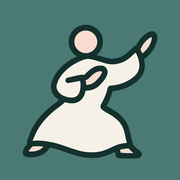
Shift back and turn the front foot out. Move support before drawing in the other foot, then step into the next bow stance as the hands separate. Continue left, right, left.
Check the version and starting position
Continue from Opening and the first left Parting the Wild Horse’s Mane. This page retains the same Shandong Engineering Vocational Technical University lesson [1], published on 2025-09-06. The front and rear continuous demonstrations and breakdown images were checked again for this continuation; no different style is inserted.
Start by identifying the first left bow stance: left foot forward, left hand opened forward-left and up with its palm diagonally upward, right hand beside the right hip with its palm down. Directions mean your own body. Front and rear views change screen position, not the left, right, left order.
After the first left side: shift back and draw in the right foot
- Move support back: gradually shift toward the rear right leg as the front left leg lengthens. Keep the left heel on the ground while the toes lift. Sitting back is not simply collecting the hands.
- Turn left and open the left foot outward: after shifting back, turn the left toes outward around the grounded heel as the body turns left. No universal turn angle is set here.
- Bring support onto the left: settle the left sole and gradually move onto that leg as the right heel rises. Do not pull the right foot away while it is still your main support.
- Hold the ball and draw in the right foot: bring the left hand near the left chest, palm down, with the right hand underneath, palm up. Draw the right foot inside the left, its toe touching lightly. The left side now provides the main support.
The left toes lifting during the backward shift and the right foot drawing in afterward are different events involving different feet. Do not close both feet and stand up between sides. Ball-holding includes both hands changing, not merely turning over the leading palm before stepping.
The second side: step right into the bow stance
- Step the right foot forward-right: from left-side support with the right foot drawn in, turn and step right, touching the heel down first. Do not rush the body forward while still finding the landing.
- Settle the sole and form the right bow stance: gradually move support forward, bending the right leg and extending the left. Stepping, changing support and forming the stance are connected changes, not one endpoint.
- Separate the hands with the turn: open the right hand forward-right and up, palm diagonally upward. Press the left hand down beside the left hip, palm down. Read the hands with the turn and stance rather than setting them first and adding the feet afterward.
You have moved from the first left bow stance into the second, right bow stance. Check the right foot’s landing, the change in support, and the hand beside the left hip as well as the hand in front.
After the right side: shift back and draw in the left foot
- Shift back onto the left: gradually move from the right bow stance toward the rear left leg. The right leg lengthens; keep its heel down while lifting the toes.
- Turn right and open the right foot outward: after shifting back, turn the right toes outward around the heel as the body turns right.
- Bring main support onto the right: settle the right sole and gradually move onto the right leg as the left heel rises.
- Hold the ball and draw in the left foot: right hand near the right chest, palm down; left underneath, palm up. Draw the left foot inside the right with its toe touching lightly. The right side provides the main support.
This time the right foot turns outward and the left foot draws in. Pause if you are still copying the previous side’s directions; reaching the next bow stance does not explain a missed transition.
The third side: step left and identify the endpoint
- Step the left foot forward-left: from right-side support and the drawn-in left foot, turn and step left, touching the heel down first.
- Gradually form the left bow stance: as the left sole settles, move forward, bending the left leg and extending the right.
- Open left and press right: left hand forward-left and up, palm diagonally upward; right hand beside the right hip, palm down. Coordinate the hands with the turn and forming stance.
The passage is first left, second right, third left. Doing one side each does not complete it. The Tsinghua 24-form list [2] also gives three groups of holding the ball, drawing in, turning, stepping and separating the hands into a bow stance.
The third left bow stance is this page’s checking endpoint, not the closing of the complete form. White Crane Spreads Its Wings comes next and needs its own entry and support instructions; this page does not teach that movement. Do not hold the bow stance waiting for playback to finish. Use the explicit stopping arrangement taught in your course; obtain in-person guidance if entering or leaving the position is unstable.
Check three things when changing sides
- Which front toes lift? The left after the left side, the right after the right side. Turning that foot outward and drawing in the other foot are different changes.
- Which side bears weight while the other foot draws in? Mainly the left when drawing in the right; mainly the right when drawing in the left. A toe touching down does not mean equal support.
- Which palm opens upward? The right in the right bow stance; the left in the third left bow stance. Check the downward palm beside the opposite hip, too.
Watch without following first. Locate these events in the original front demonstration around 0:35–0:54 and rear demonstration around 1:05–1:30, then compare the breakdown. The section marked common errors from about 3:30 is not a correct route to copy. This viewing task sets no repetition count, breathing rhythm or fixed weight ratio.
Stop with pain, dizziness or obvious instability rather than deepening a stance or forcing a turn on a supporting foot. For terms, return to support and footwork. To describe a sticking point to a teacher, use the hands, trunk and feet observation example.
References and sources
- Shandong Engineering Vocational Technical University: 24-form Parting the Wild Horse’s Mane, side-change review
Physical Education teaching page, published 2025-09-06. Reopened through the proxy on 20 October 2026. Normal HTTP Range requests retrieved the front passage 0:35–0:55 and rear passage 1:05–1:35; images were checked at one-second intervals with a closer check of the collected foot. Breakdown keyframes from 1:55–3:25 were also examined. Used for shifting back, turning the front foot out, holding the ball and drawing in the other foot, stepping and the left-right-left order. The common-error section from about 3:30 was excluded as correct instruction. The audio was not audited. No instructor identity verification, fixed angle, depth, repetition count or breathing rhythm is claimed. The video and screenshots are not republished.
- Tsinghua University staff tai chi association: names of the 24-form movements
Downloaded and converted the Word document in this English review. Compiled in June 2003, it lists the 24 movements and component actions. It does not prescribe a universal step length, stance depth, or practice dose.
- NCCIH: Tai Chi—What You Need To Know
An overview of research, safety, and variation in instructor training. It does not validate every tai chi course, and trial schedules are not personal practice prescriptions. Read our study summary →