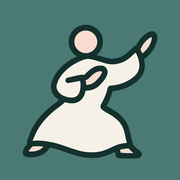
Follow one transition and compare feet, trunk and hands at the same moment: lowering, holding the ball, then stepping and separating the hands. Locate the mismatch and ask for feedback.
Watch the feet and body as well as the hands
The basic terms guide explains stances, footwork and weight shifting. This page addresses a different task: checking how separately understood actions belong to the same transition. Use the already explained Opening into the first left Parting the Wild Horse’s Mane, without adding a new form or route.
| Stage | Feet and support | Trunk | Hands |
|---|---|---|---|
| End of Opening | Feet apart; knees bend as the palms lower. No forward bow stance yet. | Remain upright; the right turn for holding the ball has not begun. | Both palms face down near the front of the hips, not one above the other. |
| Turn right, hold the ball, draw in the left foot | Support gradually moves mainly to the right. The left toe touches lightly inside the right foot. | Turn slightly right with the hand arrangement rather than copying only its final shape. | Right hand near the chest, palm down; left underneath, palm up. |
| Step left into the bow stance and separate the hands | The left heel lands first. Support gradually moves forward as the sole settles. | Connect the turn, step and forming stance; do not rush forward before the foot settles. | Left palm opens forward-left and up; right presses beside the right hip. Read them with the turn and stance. |
These are observation points, not extra stops or one-breath stages. The order follows the Tsinghua list [1]; routes retain the earlier review of the same Opening [2] and Wild Horse’s Mane [3] lessons. Locate the stage that is unclear, then compare all three columns.
Relaxed does not mean collapsing
Use the lowering phase of Opening to distinguish support from collapse. The palms lower as the knees bend. The arms still have a route and the trunk stays supported. Persistently raised shoulders, suddenly dropped hands and an extra knee bend after the hands finish are different questions to inspect.
Suppose a recording shows the hands already near the hips while the body keeps descending. Stop following and compare how the same lesson links hand lowering and knee bending. Ask whether you have interpreted sinking as going as low as possible. This observation alone cannot judge your technique or prescribe a knee angle. A deeper bend does not supply a missing sense of relaxation.
Weight changes explain how a step becomes available
Drawing the foot in, landing the left heel and gradually forming the bow stance are different phases. Ask which phase the hands and trunk belong to as well as which side bears weight. If the front hand is already at its endpoint while the foot is still searching for its landing, record that mismatch rather than assigning yourself a fixed weight percentage.
Review from the end of Opening through holding the ball and stepping. Notice how the hand route connects with support and turning. A final-pose photograph cannot show whether the passage was coordinated. Do not improvise a twist on a supporting foot while guessing. For palm directions and foot placement, return to the complete breakdown; for definitions, use the terms guide.
Learn the route before adding every cue at once
Watch the same section once for the foot drawing in and stepping, then for the turn and hand changes, then for the whole connection. This organizes observation; it does not prescribe movement repetitions. The Nanjing Medical University document [5] separates routes, positional detail and full coordination.
A useful feedback note could read: “24-form, Opening into the first left side. I recognize the right palm above the left in holding the ball. After stepping left, I concentrate on sending the hand to its endpoint and lose track of the turn into the bow stance. Please look at the transition with its beginning and ending.” This identifies a question more clearly than “I am not relaxed.” It cannot determine correct loading by itself.
When reconnecting the actions, do not extend one breath, count a new rhythm or hold the breath while waiting for the limbs. If an added breathing cue makes the route confusing, review that section and clarify the original lesson. Stop with pain, dizziness or obvious instability and seek guidance suited to the person.
Movement principles are not health outcomes
Understanding the three channels is learning feedback, not evidence that balance, sleep or pain improved. A movement note identifies something to clarify. Health research needs participants, a whole programme, a comparison and an observation period.
Choose one transition to show a teacher rather than collecting more versions of relax, sink and stay steady. For reviewing neighbouring actions, see learning the form in sections. For measured outcomes, read the balance, sleep and pain studies.
References and sources
- Tsinghua University staff tai chi association: names of the 24-form movements
Downloaded and converted the Word document in this English review. Compiled in June 2003, it lists the 24 movements and component actions. It does not prescribe a universal step length, stance depth, or practice dose.
- Shandong University of Engineering and Vocational Technology: 24-form Opening lesson
Physical education teaching page, September 6, 2025. This English pass opened the hosting page; the movement account retains the October 17, 2026 Chinese editorial review of front, back, and breakdown views. No new full video or audio review is claimed. The page does not name the instructor.
- Shandong University of Engineering and Vocational Technology: Part the Wild Horse’s Mane
Hosting page reopened in this English pass. The movement sequence retains the October 17, 2026 visual review of drawing in the foot, stepping, shifting weight, and separating the hands. Error demonstrations are not presented as correct positions. No universal angle or weight ratio is inferred. The new side-change article separately records its October 20 video-range review; the older record is not relabelled as a full-video audit.
- NCCIH: Tai Chi—What You Need To Know
An overview of research, safety, and variation in instructor training. It does not validate every tai chi course, and trial schedules are not personal practice prescriptions. Read our study summary →
- Nanjing Medical University: teaching methods for simplified 24-form tai chi
Downloaded, converted, and read the Word document in this English pass. No author or writing date appears in the text. It describes progressing from directions to details and coordination. University grading criteria are not used to assess readers or establish health effects.