Meditation · First steps
A wandering mind
is a place to begin.
Learn what to notice, how to return, and how to finish. No empty mind or crossed legs required.
- Use a chairArrange steady support
- ReturnThoughts can still appear
- Start shortUnderstand the whole task
- December 21World Meditation Day
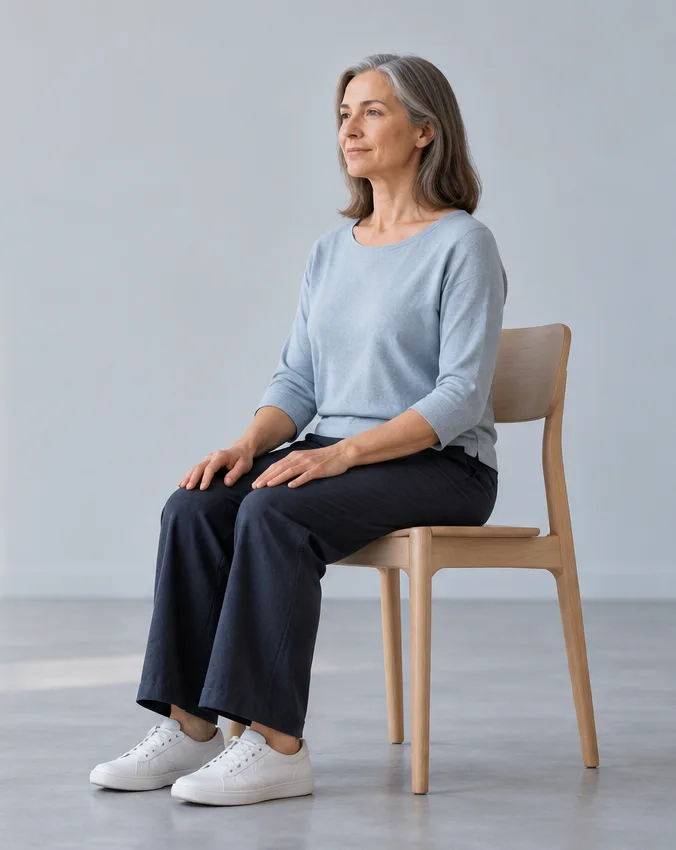
A CLEAR FIRST TASK
Notice a breath. Notice when you wander.
A beginner guide should tell you what to attend to and how to finish. You do not need a silent mind or a special posture before understanding that task.
| Feature | A useful starting point | An unnecessary expectation |
|---|---|---|
| Thoughts | Recognize distraction and return | Remove every thought |
| Posture | Use suitable, steady support | Achieve Lotus Pose |
| Breathing | Notice a natural sensation | Force depth or hold the breath |
| Time | Learn a short complete unit | Finish a long session immediately |
| Discomfort | Adjust, open the eyes, or stop | Endure until the recording ends |
| Context | Choose a guide that explains its approach | Assume all meditation has one belief system |
Returning after distraction is part of the practice. It does not guarantee that thoughts disappear or that every person finds the method comfortable.
RETURNING TO PRACTICE
Know the task before adding more time.
A familiar guide can make the instructions easier to follow. Feeling calm is one possible experience, not a requirement or a guaranteed outcome.
First session
Know where to return
Identify one attention object and a clear ending.
With repetition
Recognize the instruction
Use the same guide while learning its route and pauses.
In research
Check the whole program
Some studies use eight-week instructed courses, with substantial home practice and support.
In daily life
Keep the context clear
Everyday awareness still includes responding to the task and environment around you.
RESEARCH IN CONTEXT
47randomized trials
The 2014 journal review included 3,515 adults from clinical populations. Some anxiety, depression, and pain outcomes showed small to moderate changes. Stress evidence was weaker, and several other outcomes remained uncertain. The review did not establish superiority to other active treatments.
Read the outcomes and limitsANXIETY RESEARCH
276randomized adults
The trial published online in 2022 compared teacher-led MBSR with escitalopram in adults with diagnosed anxiety disorders. The eight-week course included weekly 2.5-hour classes, a retreat day, and daily home practice. It met a prespecified noninferiority rule; this does not validate short recordings or support changing medication independently.
Read the trial’s conditionsUseful observations while learning
Trying to stop thoughts→Knowing where to return
An attention object gives the instruction a concrete next step.
Losing the guide→Rejoining the current section
There is no need to make up every missed cue.
Ignoring support→Noticing the seat
A practical adjustment can be more useful than trying harder to stay still.
Chasing a feeling→Understanding the finish
You can end without waiting for warmth, quiet, or a special state.
Grading every distraction→Recognizing what happened
Notice thinking without turning each return into a personal failure.
These describe learning, not promised health effects. Clear distress is different from distraction; research results apply to defined programs and participants.
HOW TO START
Begin with a guide you understand.
Read how the practice begins and ends before following it. These articles explain posture, natural breath awareness, and a seated body scan.
Arrange support
Use a steady seat, with an eye position and support you can comfortably maintain.
Notice and return
Attend to natural breathing. Recognize distraction and return without forcing a deeper breath.
Finish deliberately
Return attention to the body and room. Review the instruction before deciding to add time or try another method.
Reading guides available · No First Chi meditation course

BACKGROUND
Many traditions, and several modern formats.
The United Nations describes meditation across religious, yogic, and secular traditions. Methods differ in their attention objects, settings, and aims; a single beginner guide cannot represent them all.
Mindfulness-based stress reduction is one structured modern format. The clinical trial discussed here combines classes, breath awareness, body scans, movement, and home practice. It should not be confused with an isolated recording bearing the same broad label.
NCCIH cites national survey estimates showing US adult meditation participation rising from 7.5% in 2002 to 17.3% in 2022. This describes use, not a measured benefit for every person.
The United Nations identifies December 21 as World Meditation Day and links the General Assembly resolution A/RES/79/137. An international observance raises awareness; it does not establish the effects of a specific course.
- 8weeksDuration of the MBSR program in the cited trial
- December 21World Meditation Day
- 17.3%US adult participation in 2022, cited by NCCIH
Further reading
Explore a question
Read about sitting with support, returning after distraction, choosing an attention path, and understanding research.
Common questions
Before you begin,
a few useful answers.
Do I have to empty my mind first?
No. Identify the attention object, notice when thinking takes over, and return. You do not have to resolve or remove every thought before continuing.
Must I sit cross-legged with my eyes closed?
No. Use a stable, supported seat that lets you remain awake. You can adjust, open your eyes, or finish with discomfort; a fixed pose is not a score.
What if noticing the breath makes me control it?
Observation and control are different tasks. Natural breath awareness does not require filling the lungs, holding the breath, or making every breath equally long. Pause if the attempt feels uncomfortable.
Should I treat anxiety like ordinary distraction?
No. Noticing a thought and returning is different from escalating fear or distress. Stop the current practice if it becomes clearly distressing; persistent or worsening difficulties warrant appropriate support.
Does the anxiety trial mean I can replace medication?
No. It studied a teacher-led eight-week program with specific clinical participants and support. Its finding is not a reason to stop or change prescribed treatment or substitute a short recording.
Does First Chi have a meditation course?
Not currently. These are reading guides. The homepage demonstrates a Jingang Gong lesson, which teaches a different kind of practice.
Read the sources
Teaching sources explain the practice. Research summaries identify the program, participants, and limits. Source notes state what was accessible in this review.Updated .
Explore a seated body scan.
Follow attention from support contact through body regions, then return to the whole body and room. Read the beginning and ending first.
A guide to one attention practice
Explore the app courses: Baduanjin · Jingang Gong