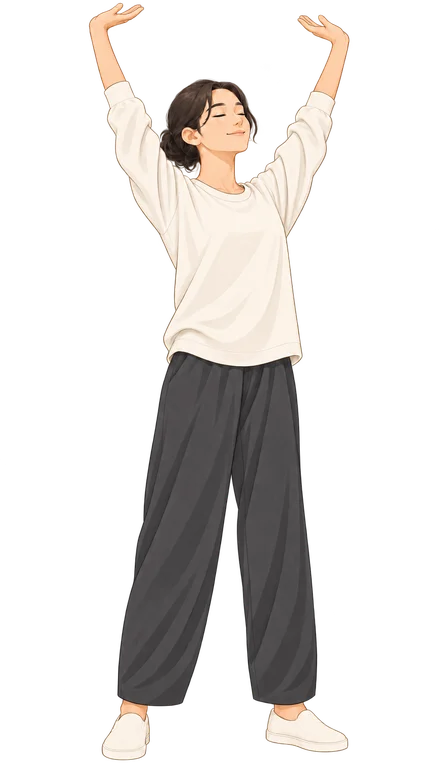
Baduanjin · Eight Pieces of Brocade
Eight movements.
A clear place to begin.
A simpler sequence to learn than tai chi. Follow illustrated steps, then practise with spoken cues.
- 8 movementsA short, consistent sequence
- One at a timeLearn without rushing
- Small spaceNo travelling sequence
- Begin hereStart with the opening
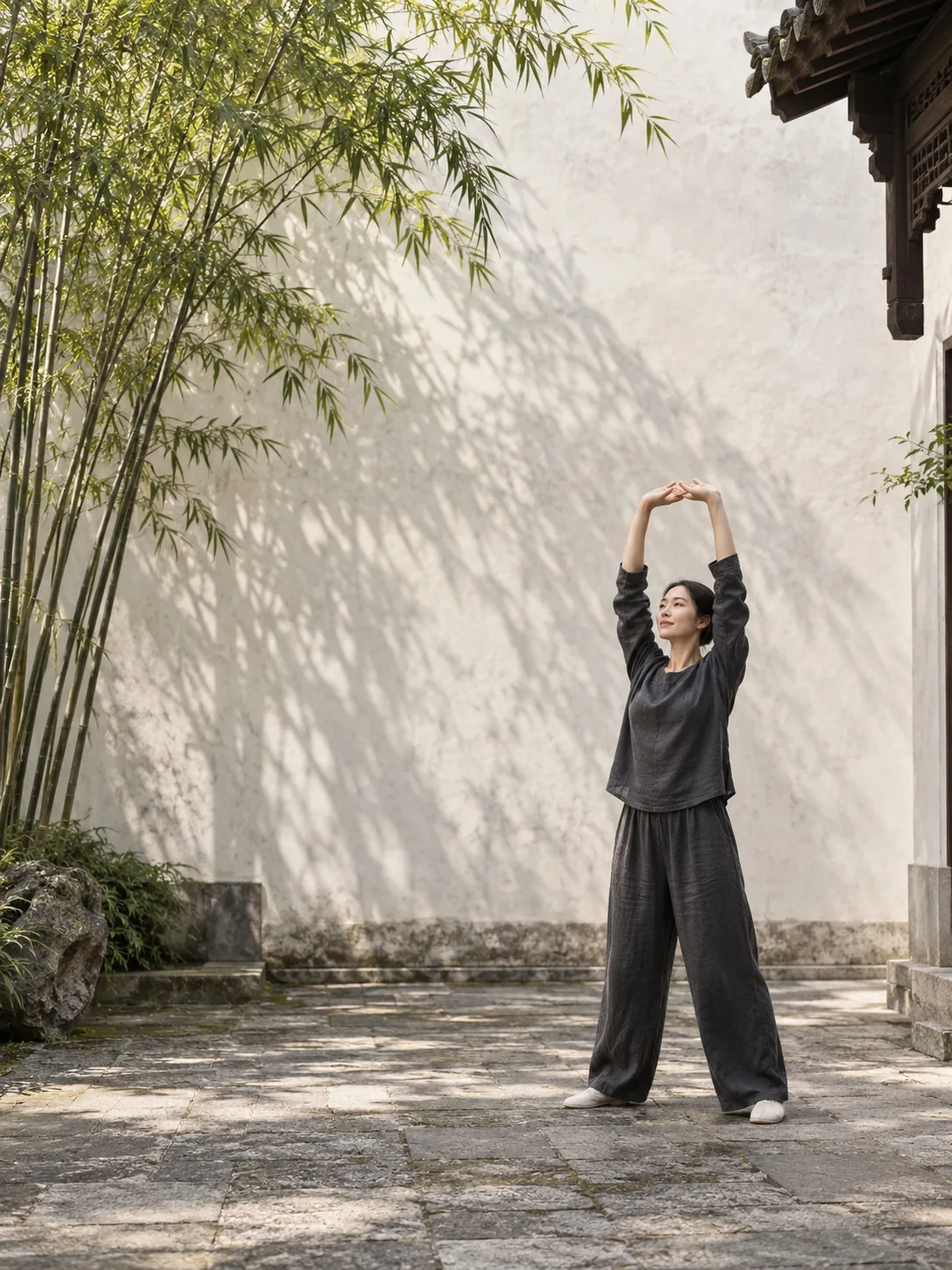
Compared with learning tai chi
A simpler sequence to learn first.
Tai chi offers a rich practice for long-term study. A travelling form also asks you to remember more directions and transitions. Baduanjin can be a simpler first sequence to learn; you can choose to study tai chi later.
| Feature | Baduanjin | 24-form tai chi |
|---|---|---|
| Sequence | Eight main movement groups with repetitions | 24 linked forms |
| Footwork | Steps within a small practice area | Travelling steps, turns and weight shifts |
| Space | Clearance for reaching and bending | Additional room for the travelling route |
| Remembering | Eight groups plus opening, closing and connections | Movement sequence, directions and transitions |
| Learning pace | Study one movement at a time | Study connected forms in sections |
This compares learning demands in these two sequences, not health effects or the quality of either practice.
A practice to return to
Make room for regular movement.
A familiar sequence can be easier to return to than a new workout every day. Notice how practice fits into your life, without expecting the same feelings or changes as someone else.
After a session
Notice the experience
Some practitioners describe warmth, ease or a quieter moment. You do not need a special sensation to count a session.
Over repeated sessions
Become familiar with the sequence
Reviewing one movement and its connections can reduce the need to watch every instruction. Learning pace varies.
Across study programmes
Read the measured outcomes
The review’s trials lasted 4–24 weeks. Their findings do not establish when an individual will notice a change.
Over the longer term
Keep the routine workable
The sequence needs little equipment. A practice that remains suitable can be revisited and adapted as circumstances change.
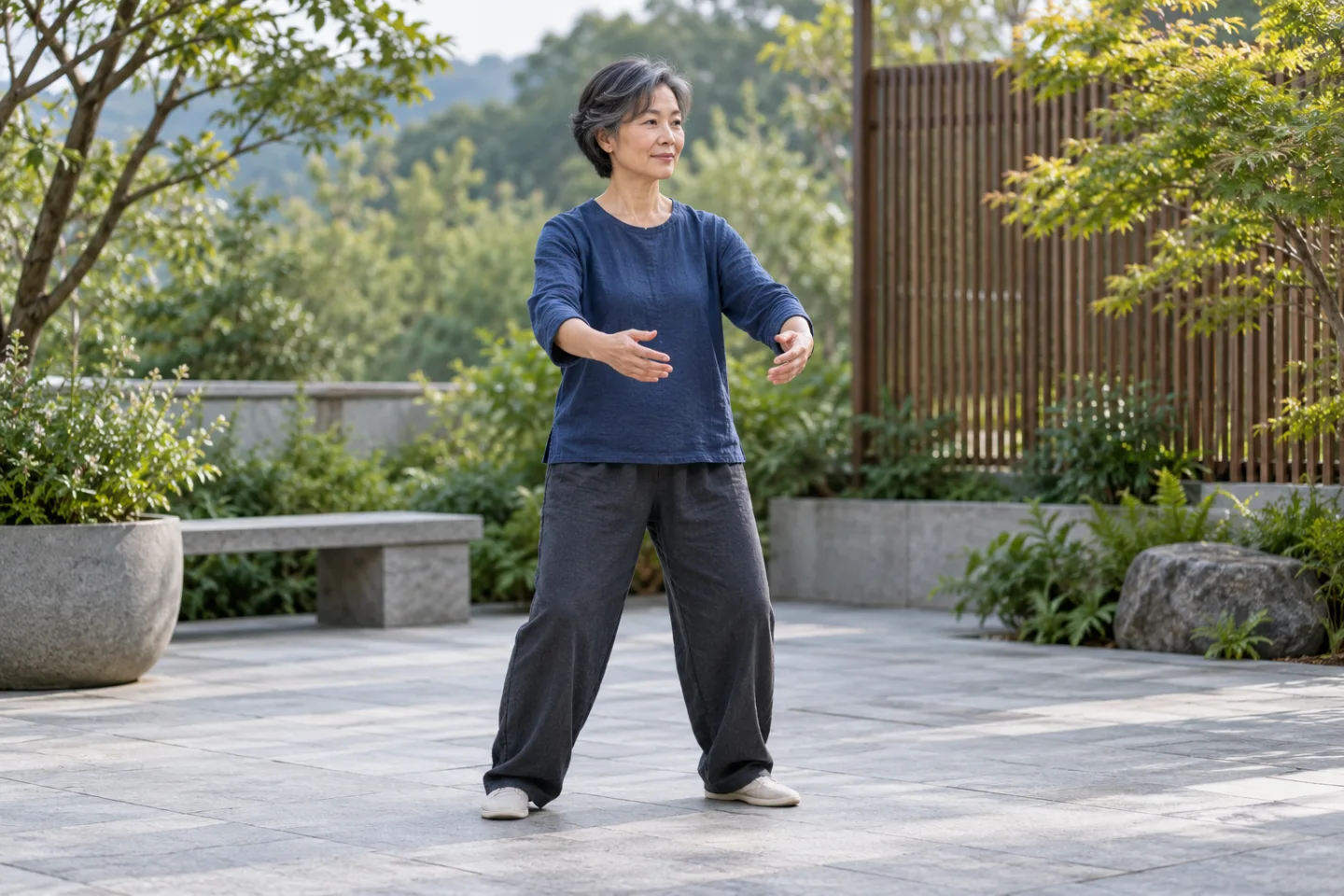
What research examined
19randomised trials
A 2017 review included 1,535 adults. Separate sleep and quality-of-life analyses reported favourable scores, with different samples and important limitations.
Read the review explanationWhat regular practitioners pay attention to
After sitting→Move the shoulders and back
Lifting, bow drawing and looking back give the session a varied movement sequence.
Low energy→Choose a manageable session
Practice need not leave you exhausted. Notice your response without treating warmth as a test.
A busy mind→Return attention to the movement
Follow where the hands and feet go, with breathing that remains comfortable.
Standing support→Pay attention to the legs
Knee bends and heel movements need support and control, not simply a deeper stance.
Everyday movement→Notice range and coordination
Review reaching, folding and returning within a range that fits your circumstances.
Experiences differ. Personal reports are not proof of a health effect; research findings apply to specific programmes and participants.
How to learn
One movement at a time in First Chi.
Each movement is divided into smaller steps. Understand one before continuing, and return to it whenever you need a review.
Learn a movement
Use illustrations, explanations and demonstration material to understand each step.
Connect it with spoken cues
After learning the movements, use the complete spoken-cue routine, about 30 minutes.
Build 100 practice days
The foundation count adds days you practise. A break does not erase completed days.
App coming soon · iOS / Android
Background
An old name, a clearly identified modern version.
The name Baduanjin is discussed in accounts of the Song dynasty, including Hong Mai’s Yijian Zhi. This historical background does not show that today’s standing sequence has remained unchanged over the centuries.
Jin means brocade. The name compares eight sections of practice with a richly woven fabric; English readers may also see Eight Brocades or Eight Sections of Brocade.
The version used here is Health Qigong Baduanjin, organised and promoted by China’s General Administration of Sport in 2003. It retains eight traditional movement groups and verses while specifying an opening, closing and transitions.
In May 2026, Xinhua reported a Baduanjin group standard issued by the China Association of Chinese Medicine and the Chinese Health Qigong Association. The institutional references below identify the modern version taught here.
- 8sectionsThe name describes eight sections of practice
- 2003versionHealth Qigong Baduanjin promoted nationally
- 67placesCountries and regions reached by Health Qigong, reported by Xinhua in 2026
Further reading
Explore a question in more detail
Read about research, choosing a version or setting up at home when the question becomes relevant.
For the eight names and their order, see《The Eight Baduanjin Movements: Names and Full Sequence》。
Common questions
Before you begin,
a few common questions.
Can I start with Baduanjin if I want to learn tai chi?
Yes. Its eight movement groups involve fewer sequences and directions to remember than a travelling tai chi form. You can learn Baduanjin first and later choose a tai chi class. They remain different practices.
Can I start without an exercise background?
The lessons begin with the opening and build in sections. You do not need to know a full routine first. Movement range and support should fit your circumstances; a beginner label does not mean every movement suits everyone.
What if I am older or unsteady on my feet?
Look at the actual knee bends, turns and heel movements before choosing a class. Ask how a teacher provides support and adapts the movements. Discuss relevant health conditions or movement restrictions with a qualified professional.
How long should I practise each day?
During learning, a short session can focus on one movement or transition. The complete First Chi spoken-cue routine is about 30 minutes, but that is a product format, not a minimum exercise dose. Regular review matters more than rushing through the set.
Which version does First Chi teach?
Health Qigong Baduanjin, the standing sequence organised and promoted by China’s General Administration of Sport. Use the same version for detailed learning and follow-along practice.
Do I need belly breathing first?
No. Begin with natural breathing while learning the route. Study breathing coordination gradually once the movements are familiar; do not hold your breath to keep up.
What if a movement feels uncomfortable?
Stop and rest. A smaller range is not a failure, and matching the demonstrator’s depth is not the goal. Persistent pain or dizziness needs assessment rather than more repetitions.
What can I read before the app launches?
Start with the illustrated opening and first-movement guide, then explore the second and third movements. The articles explain the sequence, breathing questions and sources. The app is coming soon.
Read the sources
Historical and technical references explain the version. Research is described with its participants and limits, without promising an outcome.Updated .
Begin with the opening.
Before the app launches, explore the illustrated opening and first-movement guide.
Learn the steps. Follow the cues. Keep a record.
 Not yet available
 Not yet available