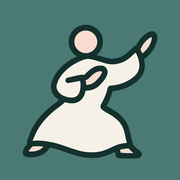
Rest with the legs extended, then restore finger and toe movements and bring the knees toward the chest. Roll onto your right side and use your left arm to sit up. Sitting is the endpoint; standing is a separate transfer.
An ending from one identified class
This unit follows roughly 44:40–49:05 of Vinyasa flow yoga on the NHS website, taught by LJ and produced by InstructorLive. The class brings the knees back to the middle while lying, enters final Savasana, then restores movement and returns to sitting. This is not a new sleep or treatment programme.
The explanation begins already on the floor. Getting down and leaving the floor require a method you have learned separately. The chair-supported transfer guide describes another source; the two do not form a default class for every reader.
Enter rest with the legs extended
The class brings the knees to the middle, then extends the legs along the mat. The arms rest beside the body, palms upward, with the fingers curling naturally. LJ then closes the eyes gently and brings attention back to breathing. Here Savasana means the lying position and ending arrangement, not a requirement to sleep, empty the mind, or feel something unusual.
The few minutes in the recording are not converted into a required duration for everyone, and no extra breathing count is added. If lying flat or closing the eyes is unsuitable, ask for an appropriate ending rather than forcing the recorded version. Ask a teacher about suitable pillows or leg-position changes if you need them.
Restore movement before rolling
- The class brings awareness back to contact with the floor, the air, clothing, and breathing.
- Begin small movements of the fingers and toes rather than springing the trunk upright.
- Bring the knees toward the chest and give them a gentle hug. The original includes a small side-to-side rock before rolling.
This describes how this class ends, without claiming that rocking treats a spinal problem or requiring the knees to press onto the chest. Understand the next step before moving. Clear discomfort does not require waiting for the recorded rest to finish.
Right side, then left-arm support
- When ready, roll onto your own right side. Directions refer to the practitioner, not the left and right edges of a screen.
- Bring the left hand and arm across the front of the body to obtain support. The original cue identifies this arm as helping lift the trunk.
- Use that arm support to bring the upper body into floor sitting. The class then checks for a comfortable seat, both sitting bones on the floor, and released shoulders.
The sequence does not use a direct sit-up from the back or move immediately from sitting to standing. If right-side lying, arm support, or floor sitting is restricted, ask for a suitable alternative. Check your own right side and left supporting arm together. If you need the other side, confirm a suitable method first.
End in sitting; the whole class is not a prerequisite to reading
The final sitting check addresses a steady seat, a long trunk, comfortable shoulders, and a soft gaze. Sitting is this return unit’s endpoint. Standing afterward requires a separate method you have learned. You can locate the ending to understand it without completing the class’s inversions or deeper backbends first.
That does not mean every segment can be followed without preparation. The original page’s health and fitness requirements still apply. Stop with pain, dizziness, or clear discomfort and seek help appropriate to the circumstances. The distinction between a pose and a measured health outcome is covered in research and its limits.
References and sources
- NHS: Vinyasa flow yoga, taught by LJ / produced by InstructorLive
On 2026-10-20, read the complete NHS page and all official English captions for its embedded video; inspected relevant official thumbnail frames for support and practitioner-side directions. This is not a frame-by-frame technical review of the whole video. Video ID 3216857453001. Uses Child’s Pose/all fours at about 10:02–11:28 and final lying rest/right-side roll/left-arm rise at 44:40–49:05. Does not adopt Dolphin, Downward-Facing Dog, inversions, deeper backbends, mechanisms, or health claims. NHS describes general exercise for people in good health with a reasonable fitness level, not condition-specific treatment. The approximately 50-minute class is not a beginner dose set by this site.
- NCCIH: Yoga—Effectiveness and Safety
Read the definitions, variation between programs, beginner considerations, and survey figures. This overview does not validate a particular online course.