Part 7 circles the arms above the head, turns, bends toward the opposite foot, and rises again. This repeated action is called the phoenix’s three nods. Repeat on the other side, then draw the fists and foot back.
Step out and circle before turning and bending
Phoenix Spreads Its Wings (Feng Huang Zhan Chi Zhou Shen Li) begins with fists at the abdomen and a step left. The arms start left and circle up, right, and down before the turn, bend, and return upright. A picture of a bend shows only one moment.
Directions refer to the practitioner’s own sides.
Steps 1–7: step out and circle above the head
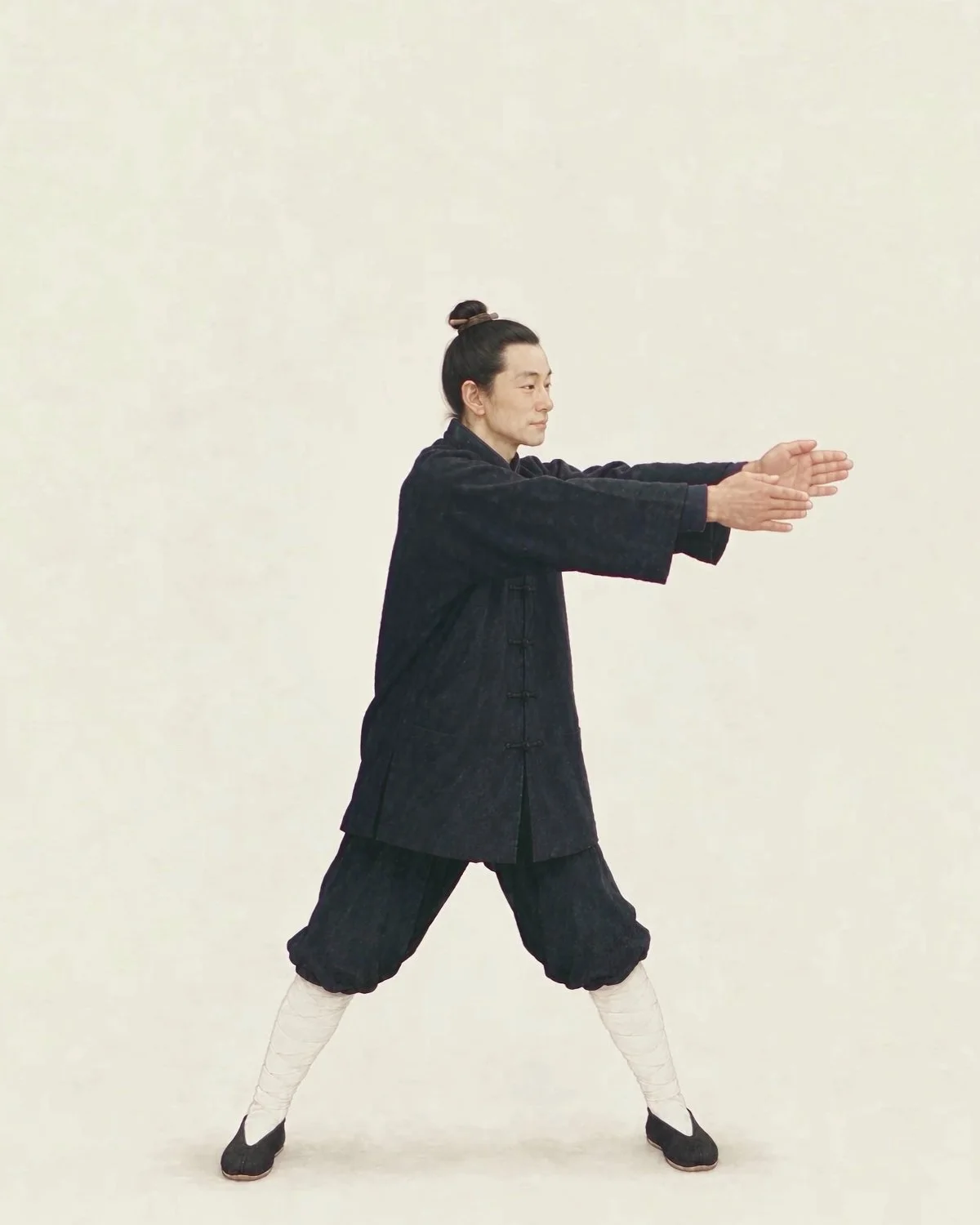
Oblique front view: arms extend to the practitioner’s left with palms facing each other. The circle continues above, right, and below.
- Prepare: continue from Part 6 with fists at the abdomen and feet apart.
- Step left: move the left foot sideways into a wider stance.
- Extend both arms left: open the fists, palms facing each other, with parallel arms at shoulder height.
- Circle up: continue the arm route upward.
- Circle right: pass above and toward the right.
- Circle down: continue downward and make two further circles along the same route.
- Pause above the head: on the third circle, pause briefly with the hands above the head.
This leads into the right-side wing sequence, but the arms begin by extending left. Remember the start of the circle as well as the later turn.
Steps 8–11: turn right and make the phoenix’s three bows
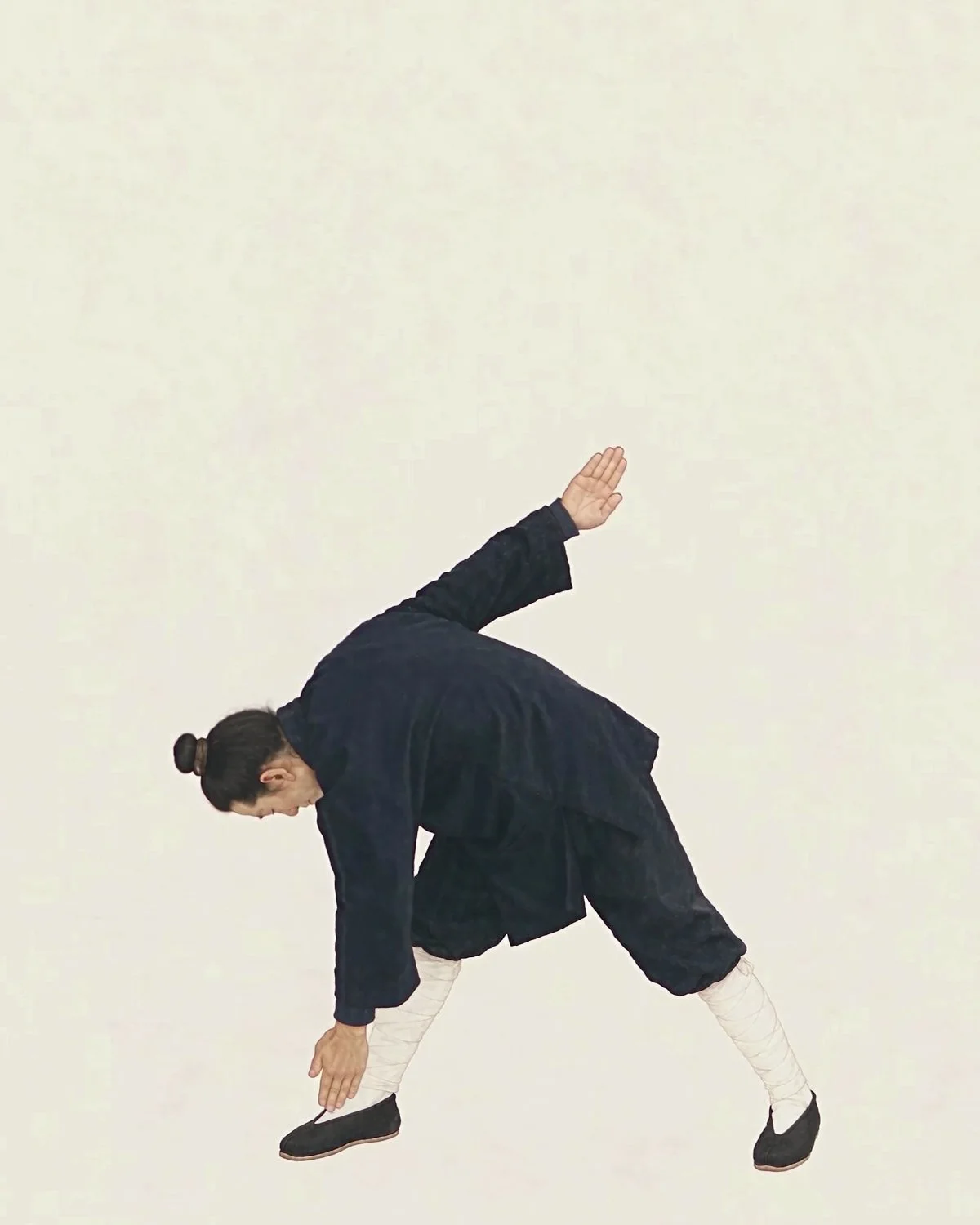
Oblique front view: left fingers point toward the right toes while the right arm extends back and upward. This image shows one bend, not all three repetitions.
- Turn right: turn the body right, lower the right hand, and keep the left hand overhead.
- Bend toward the foot: let the waist lead as the left fingers point toward the right toes and the right arm opens backward and upward.
- Rise and raise the hand: straighten the trunk and lift the left hand overhead again.
- Repeat the bow: bend and rise again. The manual describes three consecutive downward-and-upward movements in this segment.
Step 12: spread the wings on the other side
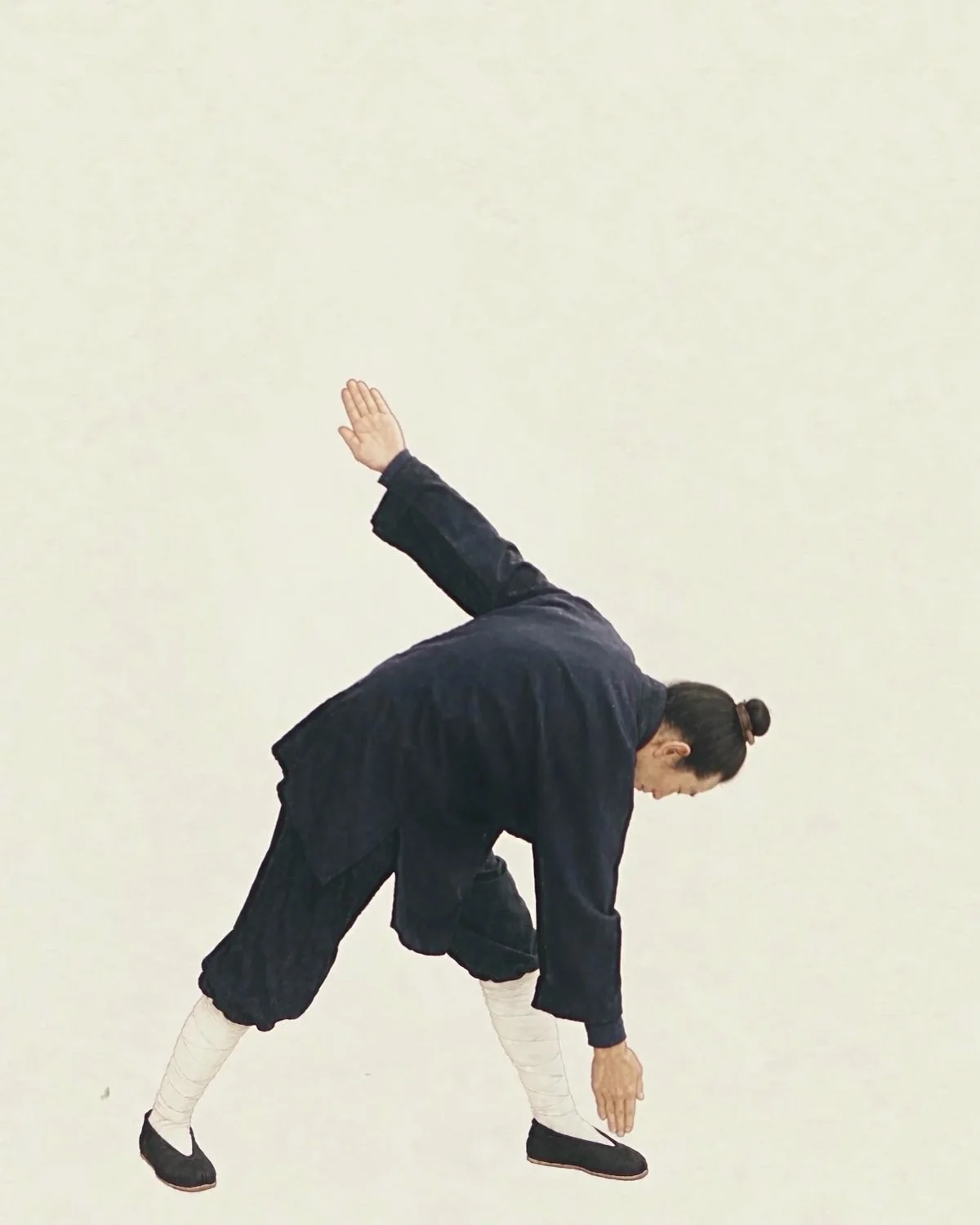
Oblique front view: right hand points toward the left toes and left arm extends backward. The circles and return to upright are described separately.
After the right-side sequence, bring both hands up on the right, palms facing each other. Circle up, left, and down. Turn the body left, point the right hand toward the left toes, and extend the left arm backward. Complete the bends and returns in the opposite direction.
The manual groups the whole other-side sequence under step 12. It is not one pose or a shortcut that omits the circles.
Steps 13–14: finish the circle, close fists, return the foot
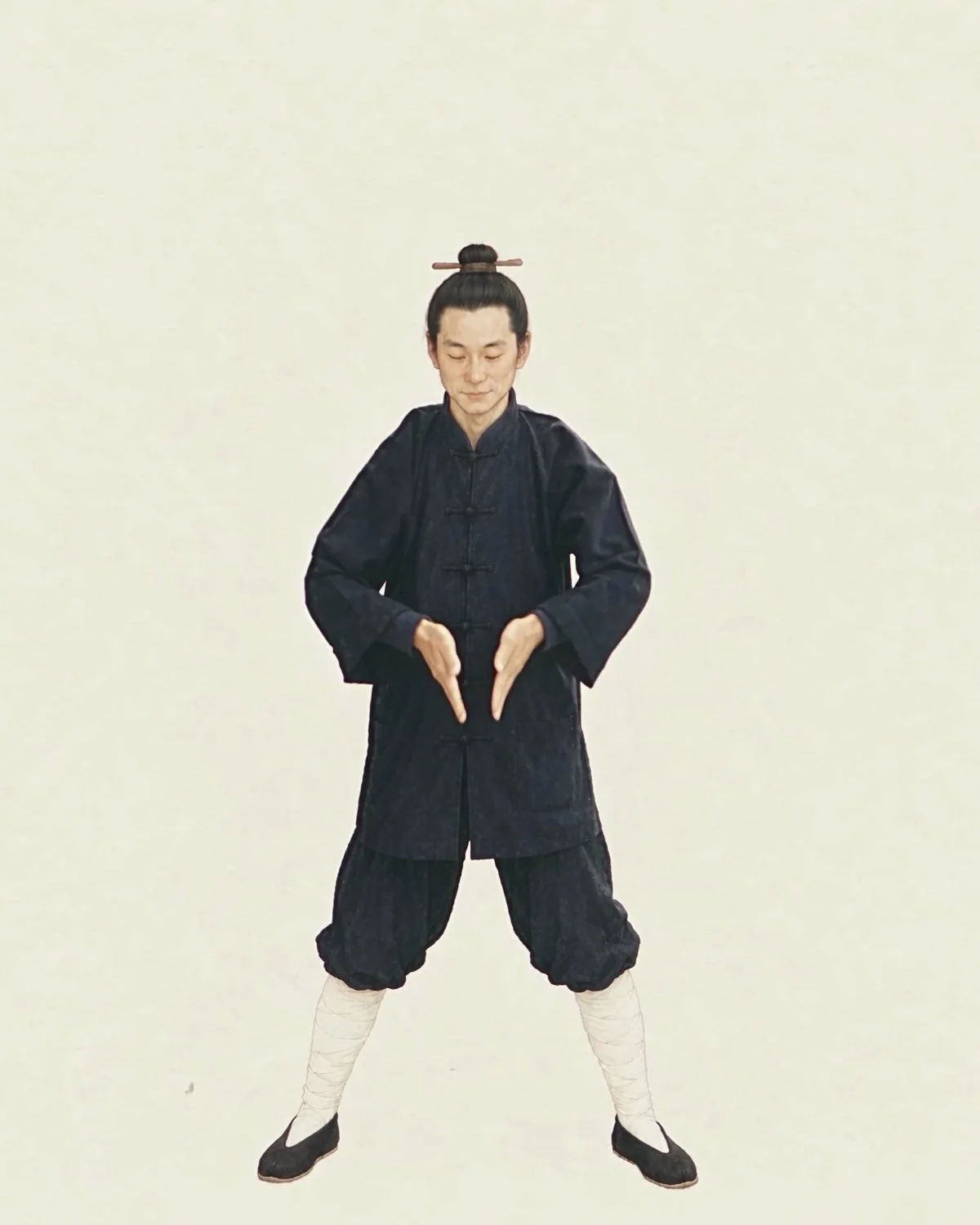
Front view: palms remain separate and feet remain wide. Closing the fists and drawing the left foot back follow in step 14.
- Finish the circle: move the hands left, up, and down to the right in one circle, ending at the lower abdomen.
- Close fists and return the foot: close the hands, palm sides up, fists facing each other before the navel. Draw the left foot back.
Does “three nods” mean moving only the head?
No. It refers to three bends and returns upright after turning. On the right side, the left hand points toward the right foot and the right arm extends backward; reverse this on the other side. Do not force the body downward to match a pictured toe position. Range depends on the person and appropriate guidance.
Do not skip the foot return before Part 8
After both sides, complete the circle, bring the fists before the navel, and draw the left foot back to shoulder width. Part 8 then prepares the crossed hands, lifting and pressing down. Feet come together only at its step 6.
The foot position after Part 7 differs from the heel-raise position in Part 8. Continue to Part 8, preparation and heel movements.
References and sources
- Babu Jingang Gong, Part 7: printed pages 98–111
Reference for Part 7 step numbers and wording. In this scan the PDF page count is 13 higher than the printed number; check the contents when using another scan.
- Illustrated Babu Jingang Gong, pages 27–30
Used to compare positions, routes, and grouping. Website diagrams were made separately; the guide’s photographs are not reproduced.